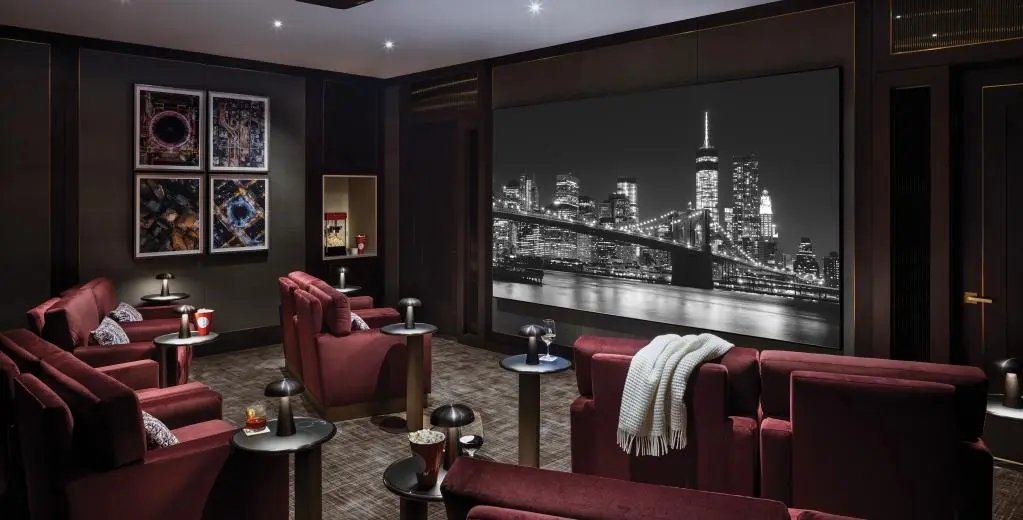
Dedicated home theatre with tiered seating

Home Theatre

Dedicated home theatres and media rooms, designed around your room and calibrated on site.

Designed around your room

A good theatre depends on the right screen size for your seating, correct speaker placement and a room that has been treated for sound.

We design dedicated cinemas for new builds and basements, and media rooms that still work as family rooms the rest of the time. Either way, the design starts with measurements: room size, ceiling height, seating distance, windows and what is behind the walls.

Every theatre comes down to five decisions

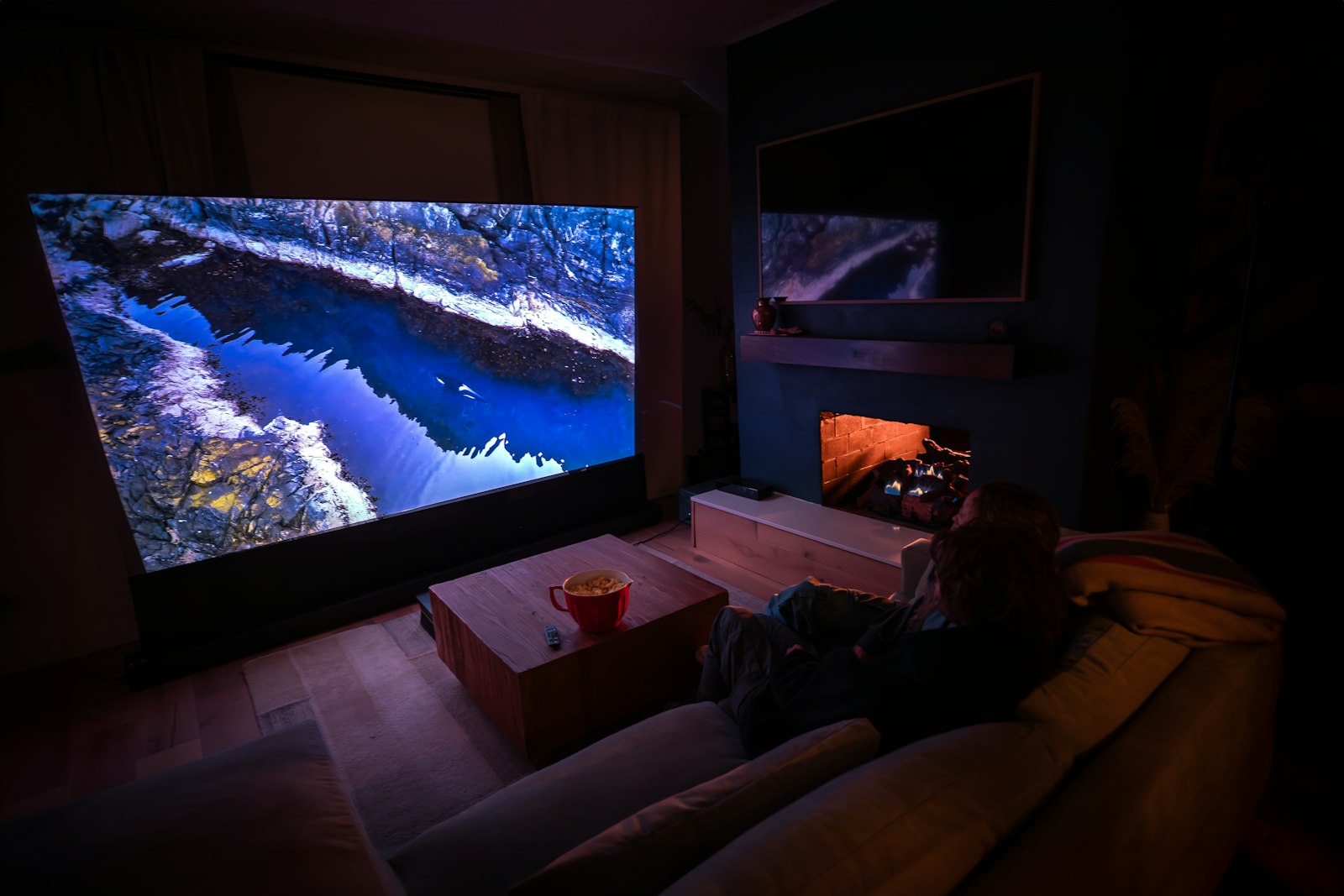
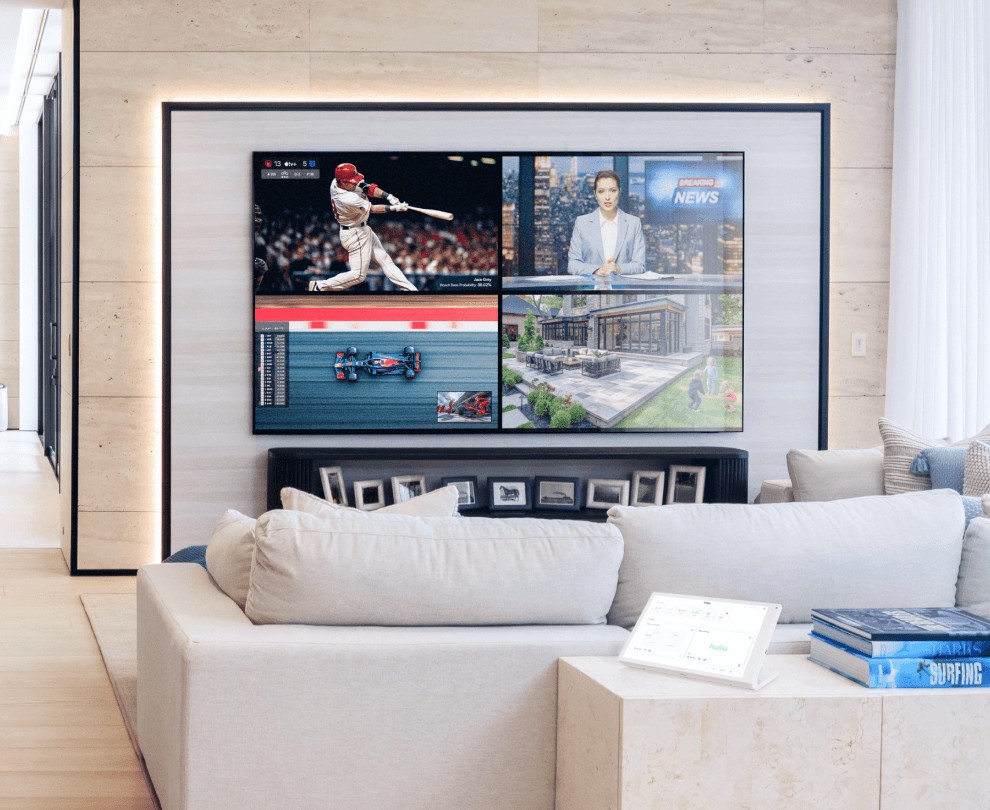
Media room with a large display
01

The screen

Size comes from seating distance, not from the biggest option available. Too large and you are turning your head; too small and it feels like TV.

Projectors give the biggest image for the money and suit rooms you can make dark. Large TVs, now up to 98 inches and beyond, cope far better with daylight, which matters in a family room. We show you both for your room before anything is ordered.

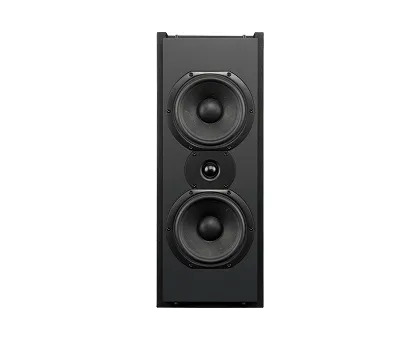
Triad in-wall speakers
02

The sound

Dolby Atmos adds height speakers in the ceiling. Most media rooms are well served by 5.1.2 or 5.1.4; larger dedicated rooms with two rows often justify 7.1.4.

Placement matters more than speaker count. A carefully placed smaller system beats a larger one squeezed into the wrong spots, and bass is planned with the seats, because subwoofers sound completely different from one seat to the next.

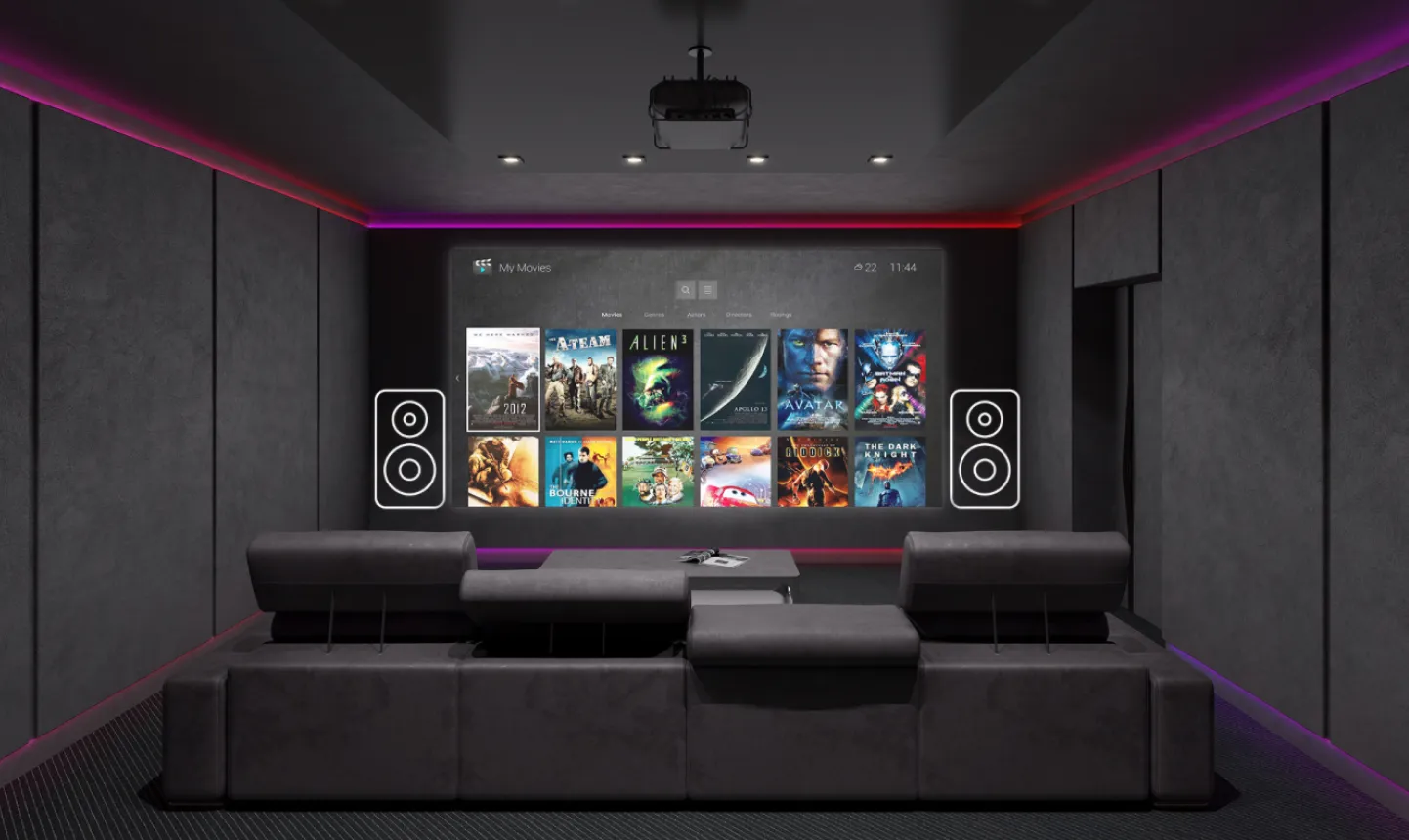
Theatre with acoustic wall finishes and dimmed lighting
03

The room

Acoustic panels at the reflection points and behind the seats reduce echo and make dialogue clearer.

In dedicated rooms we also look at sound isolation to limit noise reaching the rest of the house. This is much easier to do before drywall, so it is best to involve us early.

Theatre seating facing the screen
04

The seats

Rows are positioned for both sightlines and sound. With two rows, the riser height decides whether the back row watches the film or the heads in front.

We plan seating with the screen and speakers together, so every seat sits inside the surround field rather than just the one in the middle.

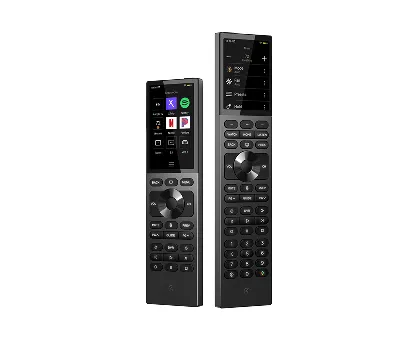
Control4 Halo remotes
05

The button

One button on a Control4 or Crestron remote dims the lights, closes the shades, turns on the right equipment and starts the film.

Once the room is finished, we calibrate speaker levels, distances, bass and picture settings with the furniture in place. Speaker layouts follow CEDIA/CTA-RP22, the industry’s recommended practice for immersive audio.

Beyond the theatre

Music in every room

In-ceiling and in-wall speakers with separate volume control in each room. Play different music in different rooms, or the same music throughout the house.

The patio and the pool

Weather-rated and landscape speakers for patios, decks and pools, set up to keep sound within your yard.

TVs that disappear

Screens that lift out of a cabinet at the foot of the bed, drop from the ceiling or hide behind art, for rooms that shouldn’t be about a TV.

One rack, every screen

Cable boxes, Apple TVs and consoles kept in one equipment rack and available on any TV in the house.

The detail behind a great theatre

Choosing the display

Large-format TVs have changed what a media room can be. OLED panels give the deepest blacks and suit rooms you can dim; mini-LED panels are brighter and hold up better in a sunny family room. Sizes from 85 to well over 100 inches are now common, and art-mode TVs look like a framed picture when they are switched off.

Projection still gives the biggest image for the money. 4K laser projectors start instantly and never need a lamp change. A ceiling-mounted projector fires from the back of the room; an ultra-short-throw model sits on a console just below the screen, which suits living rooms where a ceiling mount isn’t practical.

Screens and sizing

Fixed-frame screens give the cleanest edge in a dedicated theatre. Motorized drop-down screens disappear into the ceiling when the room is used for something else. Acoustically transparent screens let the front speakers sit directly behind the picture, so dialogue comes from the actors’ mouths.

In rooms that can’t be made fully dark, an ambient-light-rejecting screen keeps contrast up. As a guide, the image should fill roughly 30 to 40 degrees of your view from the main seat: wide enough to be immersive, not so wide that you are turning your head to follow subtitles.

Speakers and bass

The three speakers across the front carry most of the dialogue and music, so they should be matched and placed at the same height around the screen. Surround speakers sit beside and behind the seats, and height speakers go overhead following Dolby’s placement guidance.

Bass is where most rooms go wrong. A single subwoofer usually leaves some seats booming and others thin. Two or more, placed and measured together, even out the bass across every seat, which matters more than adding more speakers elsewhere.

Electronics and sources

Media rooms usually run on a quality AV receiver. Larger dedicated rooms often use a separate surround processor and amplifiers for more power and control. Either way, room correction is measured with a microphone at the seats and then fine-tuned by hand.

Sources include Apple TV 4K and the streaming apps, Blu-ray, game consoles and dedicated movie servers for the highest-quality playback. Equipment lives in a ventilated rack in a closet or utility room, so nothing sits under the screen except what you want to see.

Lighting and atmosphere

Theatre lighting sets the mood before the film starts and gets out of the way once it does: LED cove lighting, wall sconces, aisle and step lights, and fibre-optic star ceilings.

Everything is dimmed together in scenes. “Movie” takes the room almost to darkness, “Pause” brings up enough light to find the snacks without ruining your eyes, and “End” slowly brings the room back up.

Media rooms that are still living rooms

The most common request is a TV above the fireplace. It is usually too high for comfortable viewing, so we often recommend a pull-down mount that brings the screen to eye level for a movie and lifts it back when you are done.

Speakers can be mounted flush with the ceiling behind paintable grilles, equipment is hidden away, and motorized shades handle daytime glare, so the room still looks like a living room when the system is off.

Planning with your builder

If the walls are still open, the most valuable thing you can do is pre-wire. That means speaker wire to every location, conduit to the display and projector, network cabling, power for motorized screens and shades, and backing in the walls for heavy TVs.

We provide drawings showing every location so the builder, electrician and designer are working from the same plan, and we walk the site before drywall to confirm everything is where it should be.

After the install

We show everyone in the house how to use the system, then come back once you have lived with it to adjust scenes, levels and anything that isn’t quite right.

As equipment ages or new formats arrive, we upgrade individual components rather than starting again, because the cabling and design are already in place.
Questions we are asked

Can you put a theatre into a finished basement?

Yes, and it is one of the most common projects we do. We route cable through ceilings, closets and floor space and keep wall openings to a minimum. Full acoustic isolation is limited in a finished room, but treatment and good placement still make a large difference.

How dark does the room need to be for a projector?

For the best picture, very dark, which is why dedicated theatres have blackout shades and dark finishes. In a bright family room, a large TV or an ambient-light-rejecting screen is usually the better choice.

What drives the cost?

Room size and construction, projector or TV, the number of speakers and subwoofers, how much acoustic work is needed, seating, and whether walls are open or finished. Our proposals show options so you can see what each step up buys.

How long does it take?

A media room in an existing home is usually a few days on site. A dedicated theatre in a new build runs alongside construction, from pre-wire to calibration once the room is finished.

Planning a theatre or media room?

Send us the room size and a few photos, and we will come back with options.

Plan Your Theatre